Mother Church
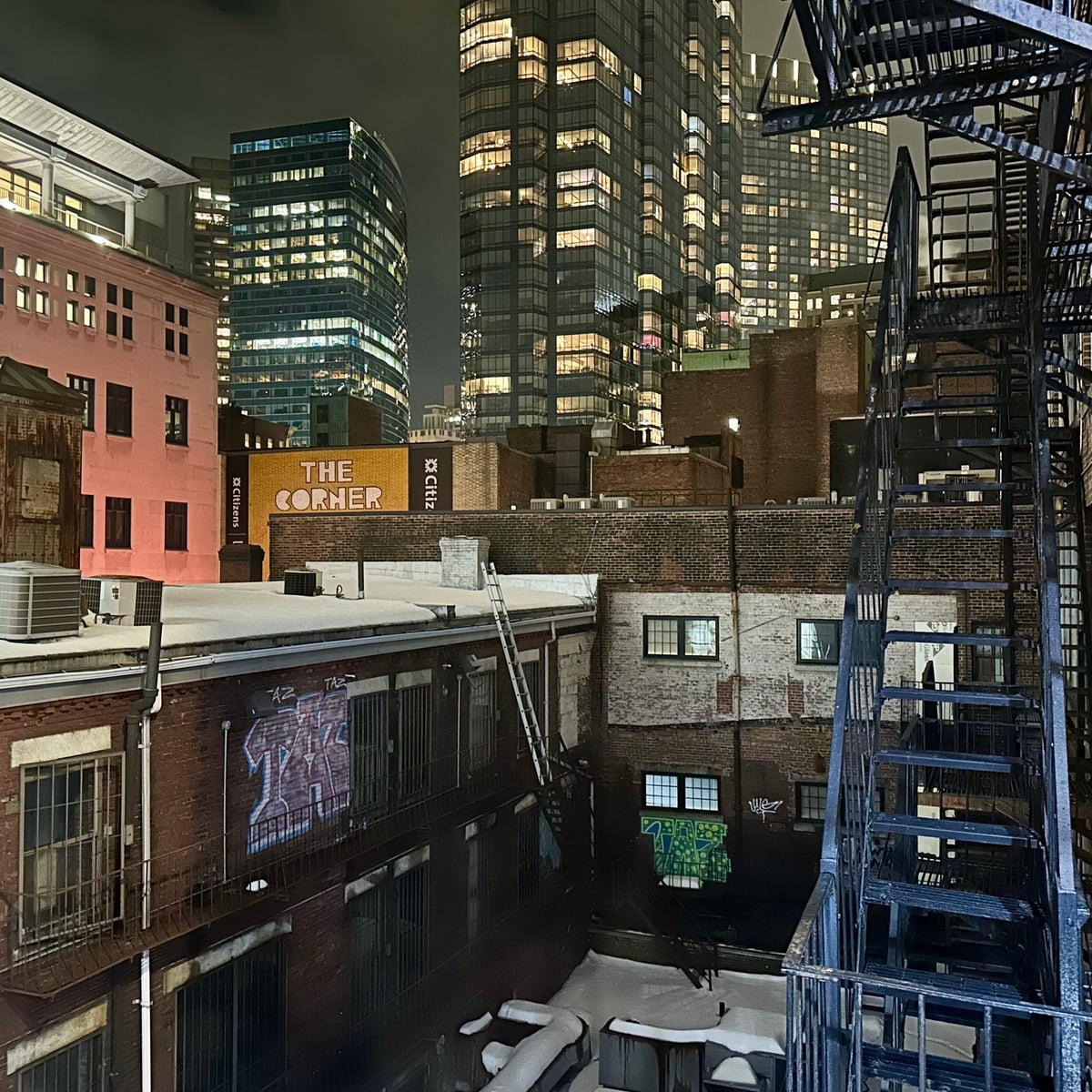
We went to Boston. I don’t know why my children wanted to go in February. It was their idea. I wanted to see a friend while there but all I did was beg my 14 year olds to get off their phones and ask them if they could please get ready to go. The apartment we had for three days was nice. It had that view out the back.
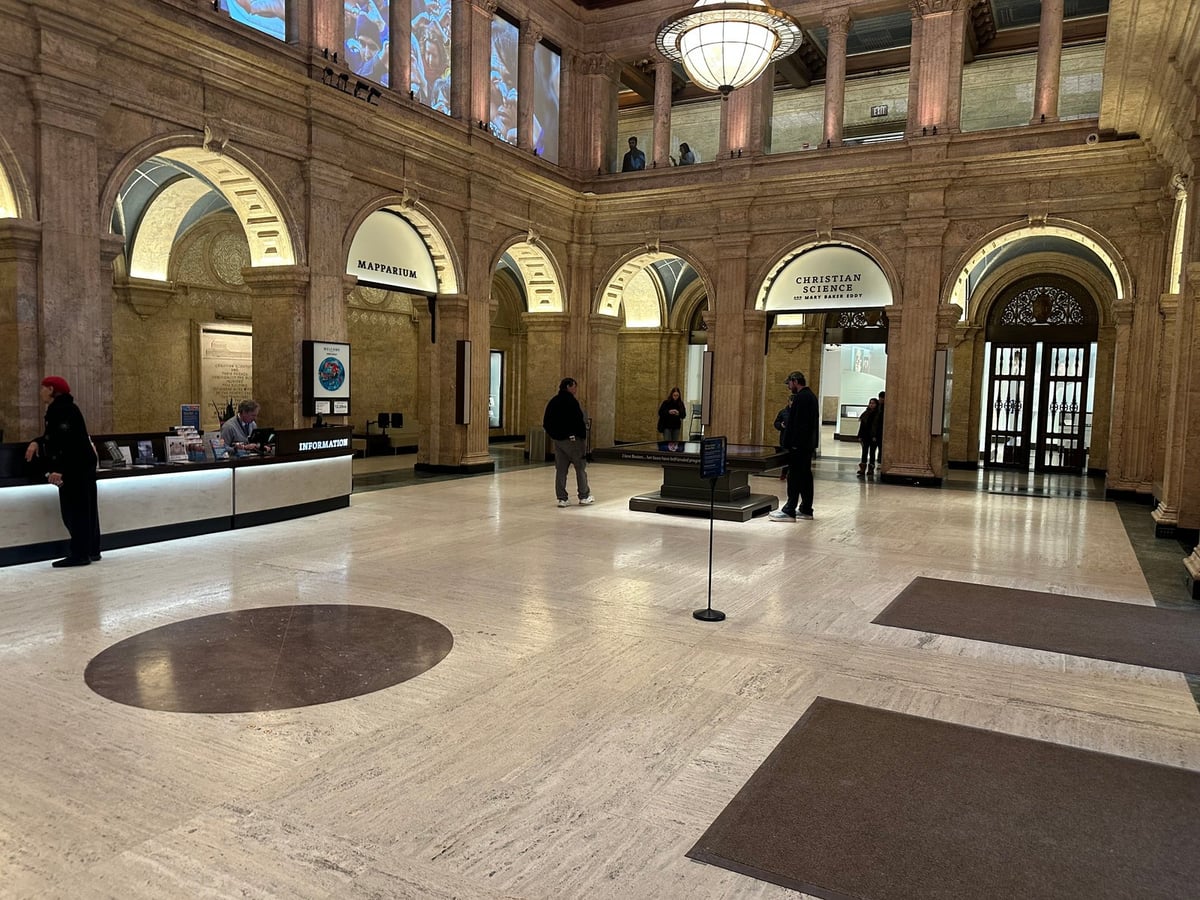
We saw a bunch of Boston things but the one I most wanted to see was the Mapparium, which is a big stained-glass globe inside the large Christian Science Library and center, across the plaza from the Mother Church. The Library looks like this:
And the Mapparium looks like this:

Go to a place, look at a thing. The real reason I wanted to go was to just be around the Mother Church, because a mentor and dear friend was a Christian Scientist. I loved him. He passed a decade ago. He took me to Amiga user group meetings.
I could tell you why he was special to me but I actually wrote about it at length when he passed. Some of the videos have faded away on the post, alas. Many animations don’t work. The eternal work of archiving.
I know you might have strong feelings about Christian Science but I see it as part of an East Coast Protestant continuum. I’ve been reading up on the various planned communities and socialist-Christian towns that sprung up on the East Coast in the 1800s. In some ways I feel that I grew up in their shadow. I took trombone lessons in the former meeting room of the Theosophist society. The books were there but I truly don’t know if any Theosophists remained.
I keep looking in on these big cultural religious spaces—literally just stopping outside a church or mosque and staring—because of the continuity they offer and the frameworks they provide for stability in the midst of chaos. The mechanisms of faith are often the same: A large, central building. Guidance as to dress and voice. A large book filled with rules. And usually three or four core beliefs that are absolutely bonkers to anyone outside the group. You need one absolutely over-the-top thing to believe in. It needs to start literally, and then be open to interpretation by subsequent generations of interpreters, who seek to rationalize the faith with the flow of the world. It’s a rigid platform but malleable at the edges. The best bet today, I think, would be for a kind of simulationism, maybe a mix of psychedelics and digital thinking with some AI in the mix. But it has to be fervent and orthodox. LessWrong comes close. You get that just right and then people spend the next 2,000 years explaining it as a metaphor. From there you just need a dome. Maybe you don’t even have a holy book; you just feed the same golden prompts to an LLM and follow what it tells you to do. Chatarianism.
On the way out there were little slips of paper you could fill out with testament to your gratitude (or other positive emotions). I wrote how grateful I was for Tom, how loving and generous he had been. I had to hurry to finish it because my family was grumbling and tapping their toes. They don’t care about the rich resonance of the Christian Science Mother Church as it flows into the large currents of the Protestant experience and the connected history of non-violent and Emersonian thought. I mean does anyone? Actually Harvard is right there so actually people who care about exactly that were extremely close and could be summoned in an emergency.
So much of my life right now is people who can’t wait one more minute, who just want to be on their phone, who are ready to get to the next thing, always hungry and ready to stomp. I’m one of them too, I know. We’re so impatient with each other, bored and fractious. Yet no one will stand more than a foot away, no matter how often you ask, and we love each other too, and pet each other on the head. The combined attraction-repulsion of a family moving together through space, a single molecule bouncing between museums. As all this was going on I was trying to edit and fact-check an article for NYT OpEd, from my phone, on the #1 bus to Cambridge, on the Green and Orange lines, and also at one point leaving an escape room to confirm final edits. Then going right back in. It is process that the writer does not truly control (both OpEd and family outings). Also we went to MIT and I saw Claude Shannon’s automata, and piles of gray snow.