Thinking a little differently about Apple TV
Thinking a little differently about Apple TV
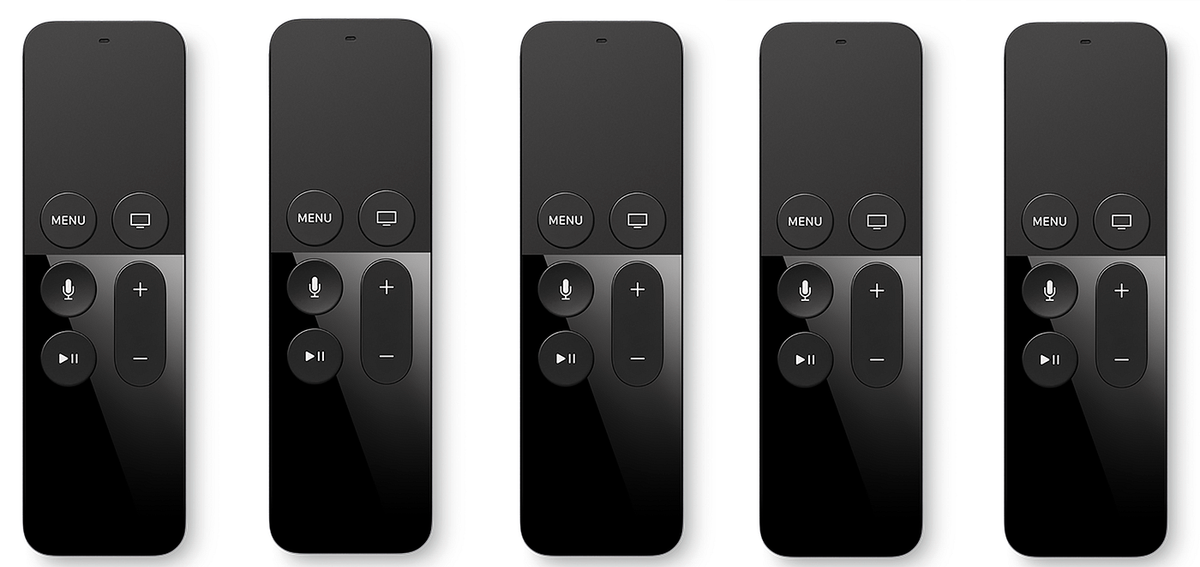
Not long ago James Wen, an engineer here at Postlight, took some time to learn his way around Apple TV. He is an experienced iOS developer, writing apps for iPhones and iPads, and he came to Apple TV with that perspective. He found that while there are massive commonalities between tvOS and iOS, there are some incredibly important differences, too.
Instead of directly interacting with a screen, the user has to use a remote control. This feels less connected to the device than touching a screen directly. Apple redesigned their remote control to include a touch surface, accelerometer, and gyroscope as a way to create an iOS-style interaction experience.
As the user slides their fingers across the touch surface on remote, contents on screen change and highlight — as if the user is touching the screen itself. For example, in a racing game, the direction a car was moving could change as a user moves and rotates the remote control.
Given the size of the screen, it’s tempting to add lots of interface elements. But even though the TV screen is much larger than any other monitor or device screen, the number of elements on screen need to stay low. On any given screen, the user should be able to have a clear picture of what to do and how to do it right away. tvOS interfaces should normally be similar to those of an iPhone, where only one kind of major actionable element should be on a screen.
If you’re an iOS programmer thinking about trying tvOS, this post will help you avoid some risks and get you set up to building tvOS apps.
Below the fold
TOMORROW! Postlight Sessions: Come meet Khoi Vinh, Director of Mobile Product Design @ Adobe
When: Thursday, April 28, 2016, 6:30 PM to 9:30 PM
Where: @Postlight’s office: 902 Broadway, 8th Floor, New York, NY

Come meet Khoi Vinh, Director of Mobile Product Design at Adobe and one of the most influential product designers working today. At Adobe he’s been putting the attention back onto designers and the needs of the design community, working directly to create tools that move interaction design forward at a global scale.
Khoi is internationally recognized for bringing the tried-and-true principles of the typographic grid to the World Wide Web. He writes and lectures widely on design, technology, and culture, and has published the popular blog Subtraction.com for over a decade.
Today’s links
- Today’s variety of religious experience: Celtic Wicca.
- Today’s JavaScript library: Duo — Next-generation package manager that blends the best ideas from Component, Browserify and Go to make organizing and writing front-end code quick and painless.
- Today’s React component: React Native GitHub.
- Today’s Creative Commons media link: Morgue File — Photo collection with license to remix.
- Today’s public data set: Indonesian Data Portal.
- Today’s freely available programming book: Computer Vision — Dana Ballard, Chris Brown.