Five Plus Gina Trapani on Impostor Syndrome
Five Plus Gina Trapani on Impostor Syndrome
Gina Trapani on Impostor Syndrome
Today Gina Trapani, Director of Engineering, Postlight, writes a great essay to remind us that we’re all faking it—and we shouldn’t judge ourselves harshly for that, but rather embrace it. It’s a good message for anyone who works in technology—a fashion industry, despite everyone’s protestations—and also a good message for the moment.
There are moments in my clarity about cluelessness when I get to witness a remarkable thing. A coworker makes a brilliant point. My co-parent practices superhuman patience with our angry toddler. A friend performs an act of extreme generosity. When that happens it’s like a flash goes off in the room. You see it. When someone does something truly good when no one knows what they’re doing, you notice. You appreciate. You feel like you’ve leveled up just bearing witness to the thing. These are the moments you think, Humans are awesome. Anything is possible. I have a lot to learn. It’s a good feeling.
The rest is great, too. Read the rest of “We’re All Frauds!”
Five
1.
Fifteen judges at the European Union’s top court are trying to decide, once and for all, whether Uber Technologies Inc. is an app or a transport company. Defeat for Uber, which sees itself as an app, would expose the company to stricter licensing rules, additional operative costs and the risk of a reduced availability of drivers. The case has been closely watched as it could set the rules of the road for others with similar business models.—Stephanie Bodoni and Marie Mawad, Bloomberg Technology
So: Uber-distrust is pan-European (“Countries including Germany, France, Italy, Belgium, the Netherlands and Spain have all at one time or other banned or curtailed the use of Uber.”—Vice News). And it’s fun to see European countries get upset about something with a German name. But when I read this I’m reminded of how much our understanding of the Internet, which is global (duh), is actually…local—even provincial.
What I wish I understood better is the “why”—Uber’s hypergrowth has become a kind of global cultural referendum on Internet laissez-faire, and each country, from China to Germany, and many cities as well, have their own reactions to that incursion. I want a spreadsheet of global Uber reaction, because I think that would teach me something about globalization, at a moment when I’m hungry for more globalization-related news.
2.

3.
[Facebook] Messenger just got way more fun — or competitive — depending on how you look at it, with the ability to play games right in your messaging conversations. — Facebook PR
As Re/Code pointed out, “This whole host-content-inside-of-Facebook strategy isn’t new for the social giant. Facebook has tried to do this with web articles and advertising, too.” But go a little meta: Facebook has just said, okay, we can deliver stateful collaborative applications in a chat experience. Not embeds, not stickers, not animations (which may dance around on screen, but are static files) — but interactions. So that chat is not a place to talk about what you’re going to do, but a place to do it. I know it doesn’t seem like a bold move but…it’s a bold move. Facebook has enormous distribution to more than a billion people. It delivers software that lets them converse with friends. It delivers chat software as part of that. Now it can deliver software inside the chat software inside of its platform. This makes perfect sense but at this scale it’s the sort of thing that can change the whole economy around apps if it catches on.
4.
CONFIRMED: @paperlesspost has removed Breitbart from their media plan. And just in time to order your holiday cards. Go get em, everyone! — @slping_giants
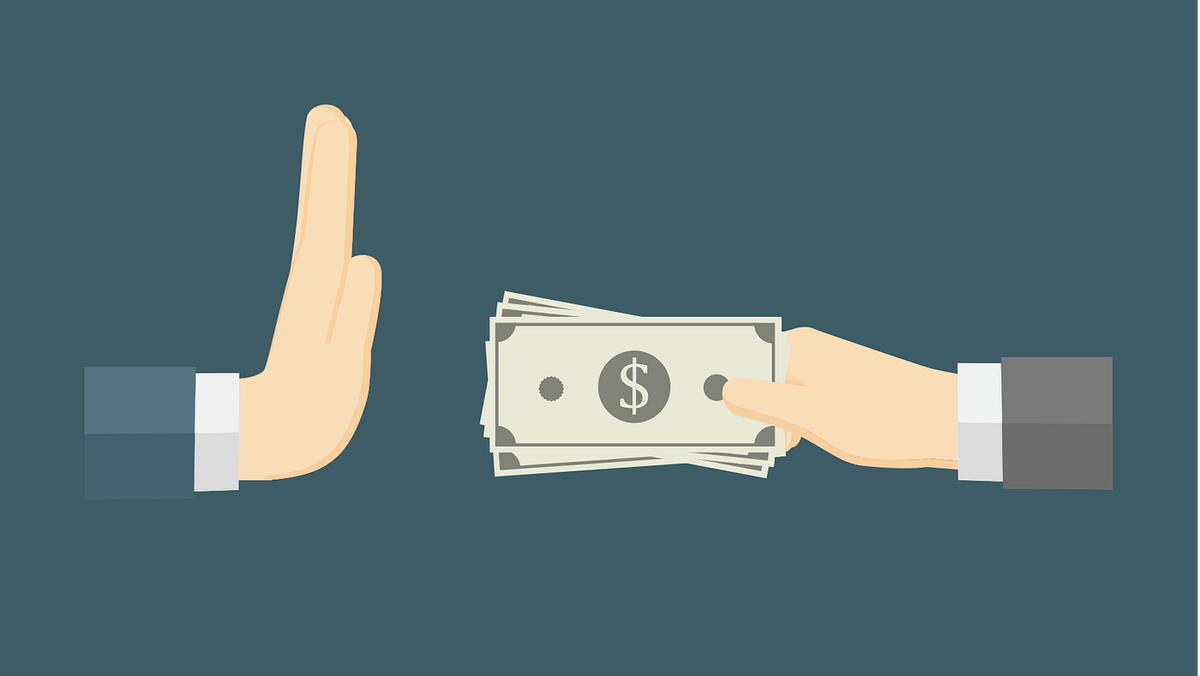
This Twitter account asks people to tweet at brands that advertise on the ultra-far-right website Breitbart, asking them if they “support hate,” or racism, or anti-Semitism. @slping_giants retweets the tweets, people retweet those retweets—and this draws negative attention to the brands. Brands hate negative associations. Not giving money to contentious media properties is one of the easiest things an advertiser can do to preserve brand value. Because ad networks let you buy across media properties, many advertisers don’t know where their ads are ending up. And so, like PaperlessPost, they pull the ads.
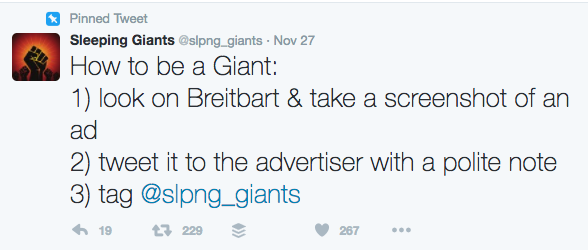
This sort of thing happened with Gawker during “gamergate”—people pressured advertisers to leave Gawker, and, amidst much confusion, some did. This is the next step of that—but also quite nimble, and broadly crowdsourced, and clever. Regular old Twitter users tweet at the brands; Sleeping Giants is there to help them disengage from Breitbart. Any publisher worth their salt when asked would say that this isn’t actually a big deal, and that there’s still lots of money to be made—but it’s a big deal to lose advertisers, and a terrible signal. This is a reproducible kind of activism that can scale by efficiently capturing and repurposing public outrage.
5.